
Have we done cruising?
Until last year we had resisted all thoughts of holidays on cruise ships. A taster day on a P&O ship a few years ago had only confirmed our reluctance to join the “cruising community”.
Last year, however, when we planned a holiday to mark our significant birthdays we ended up including a cruise as part of the trip. Almost to our surprise, we thoroughly enjoyed it. Perhaps it was the itinerary – lots of sea days plus just a few ports in destinations previously unknown to us – or possibly that it was not one of the biggest ships (2,000 passengers) which we had chosen as it was able to pass the historic locks on the Panama Canal. We enjoyed the activities on board and meals at shared tables, usually with a mix of Americans, Canadians and Australians.
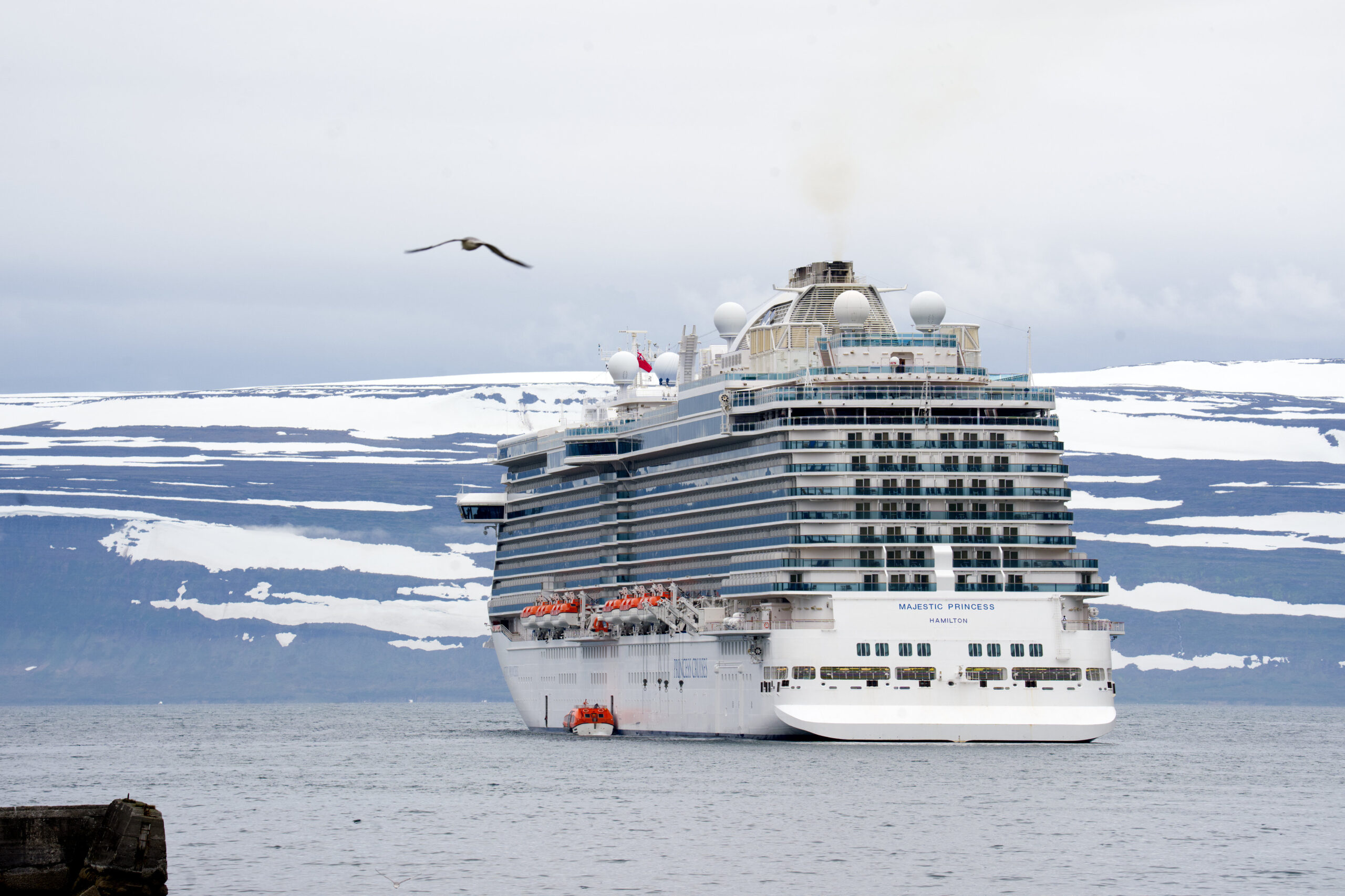
So, following the success of that trip, we booked another cruise this year. We went with the same line (Princess) and to another destination we wanted to visit: the Norwegian fjords, plus Iceland. Although this trip was enjoyable, we didn’t get the same good feeling as the previous voyage and it is difficult to pinpoint the differences. Possibly it was just missing the novelty factor we had last year, or maybe it was being on a bigger ship (3,500 passengers). The service and organisation was a bit chaotic at times and there seemed to be a scarcity of shared tables at dinner. Of the people we did meet, more seemed keen on cruise point-scoring than last year. (“I’ve been on seven cruses this year.” “This must be our thirtieth cruise.” “We’ve got platinum elite status.”)
As I said, the trip was enjoyable overall. The photos can be found at June 2026 – Norway and Iceland. We set off from Southampton, which was something of a game-changer: less than two hours’ drive, rather than an 11½ hour flight. After a day at sea we arrived at Haugesund, Norway.
It’s a small, pleasant town but somewhat overwhelmed by the arrival of a large cruise ship. The initial view was of fleets of coaches and a queue of open-top buses taking passengers on well-worn excursion routes. We took a regular service bus to nearby Avaldsnes, home of the Norwegian History Centre and capital of Norway in the first millennium.
Into the Fjords
From Haugesund we spent two days sailing into fjords: Sognefjord, over 200km long and the shorter, but equally impressive, Nordfjord. The stops at the ends of the fjords, Skjolden and Olden, are little more than villages which now largely exist to service cruise liners.
From Olden we went on to Ålesund, a much more significant town in its own right, with university and art school. It is also a stop for ships on the Hurtigruten service, making the 12-day passage from Bergen to Kirkenes in the Arctic Circle, and back. Much of Ålesund was rebuilt following a fire in 1904, so now has a fine collection of buildings of Jugendstil/Art Deco design. We left as the locals were about to light the midsummer bonfire, which this year was a 35m tall tower of pallets.
Heading to Iceland
After two days at sea, we came in sight of Iceland’s coast, arriving in Reykjavik in the morning. Again, we decided against the organised tours which mostly were a hectic circuit around Iceland’s “Golden Circle” to see volcanoes and geothermal pools. Instead, we watched a multimedia/sensory presentation in the Harpa cultural centre which explained the country’s fragile geological make-up. We then took a guided “cat walk” around the city centre, spotting the resident cats, who were mostly known by name, and visiting the cat café.
Overnight we sailed on to Ísafjörður, the principal town in the Westfjords area.
Eider ducks, puffins and terns
After a brief walk around the town, which has a number of buildings from the 18th century plus corrugated iron houses dating from the expansion of the fishing industry in the 19th century, we took a small boat from the port, heading for the island of Vigur. This is only around 2km long and less than 0.5km wide and has been owned since 2019 by a British polar explorer and her Icelandic husband. They live there with their young son and manage the island as a wildlife reserve, carefully regulating visitor access. The island has a major colony of eider ducks, which provide a harvest of their down each year, plus over 100,000 puffins during the breeding season.
The absence of land-based predators makes the island safe for the bird colonies and the human presence discourages air-borne predators, such as gyrfalcons, which make only occasional appearances. The puffins don’t seem to object to human visitors, but the resident Arctic terns can be very protective of their territory.
Back to Ísafjörður, we returned by tender to the ship, which set off on an overnight passage to Akureyri, crossing into the Arctic Circle en route.
Akureyri is a fairly modern port (although with origins in the 18th century and earlier) located on the north coast of Iceland. Again, we decided against coach tours to the local sights as we had discovered there was a public bus which would take us to the Goðafoss waterfall. The bus service only operated 2-3 times per day, but the schedule allowed us to get to the falls and spend a couple of hours before returning. After waiting at the appropriate bus stop, what arrived was a minibus on which we were to be the only passengers. Following a journey which involved a 7½km tunnel, Iceland’s only toll road, we arrived at the Goðafoss visitor centre, when the driver even got out to show us where to wait for the return service.
After aa walk around the falls, we took the return minibus, this time with a couple of other passengers, and rejoined the ship for the three-day passage back to Southampton.